

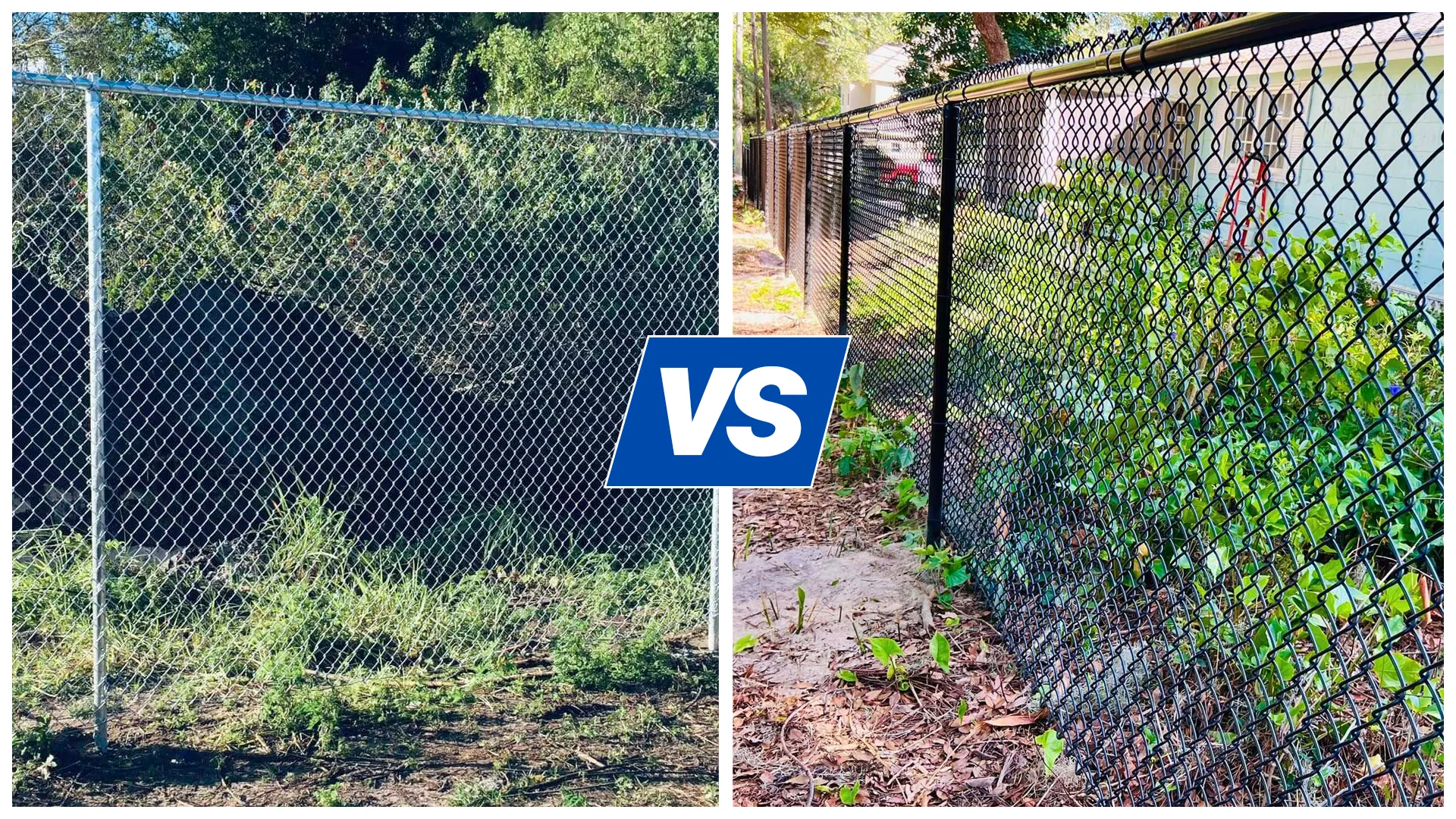
Black vinyl-coated and galvanized chain link fences both use protective coatings to help steel resist corrosion, but they differ in appearance, cost, maintenance, and how the coating performs over time. Galvanized chain link has a zinc coating, while black vinyl-coated chain link typically adds a colored coating over a galvanized or otherwise protected steel core.
Black vinyl coating can add another protective layer and create a darker, less noticeable appearance, but the fence still depends on the quality of the steel core, the underlying metallic coating, the vinyl coating, and how well cut ends, fittings, posts, and gates are handled. Galvanized chain link can also provide long service when the coating, posts, rails, fittings, gates, drainage, and installation quality are appropriate for the property.
For Orlando and Central Florida properties, the better choice depends on budget, visibility, coating quality, wire gauge, posts, hardware, irrigation exposure, salt air, drainage, and maintenance expectations.
Black vinyl-coated chain link has a colored coating over a protected steel core, giving the fence a darker appearance that often blends more easily with landscaping.
Galvanized chain link relies on a zinc coating for corrosion resistance and is often chosen when cost, durability, and a traditional silver appearance are acceptable.
Neither option should be judged by coating alone; posts, rails, fittings, gates, hinges, latches, drainage, and installation quality also affect long-term performance.
When comparing black vinyl-coated chain link, ask whether the quoted gauge refers to the steel core or the finished coated wire.
Galvanized chain link fence uses steel wire coated with zinc to help resist corrosion. The zinc layer helps protect the steel from moisture, humidity, and ordinary outdoor exposure.
Black vinyl-coated chain link typically uses a steel core with a protective coating system and an outer black coating. The black finish changes the appearance of the fence, making it less visually bright than traditional galvanized mesh.
The difference is not only color. The wire gauge, coating type, coating thickness, posts, fittings, gates, hardware, and installation details all affect how either fence performs over time.
The zinc coating on galvanized chain link acts as a protective layer between the steel and outdoor exposure. Without a protective coating, bare steel is more vulnerable to rust when exposed to moisture, rain, irrigation, and humidity.
A galvanized chain link fence can last for many years when the coating, posts, rails, fittings, gates, drainage, and installation quality are appropriate for the property. Actual lifespan depends on coating thickness, exposure, maintenance, irrigation, salt air, soil conditions, and damage to the protective coating.
Galvanized chain link is often chosen when a property owner wants a functional fence at a lower initial cost than some coated or decorative options. It is also common for side yards, backyards, utility areas, commercial perimeters, and other locations where appearance is less of a priority than function.
Black vinyl-coated chain link may offer additional protection when the coating system is high quality and remains intact. The outer coating can help shield the metal core from direct exposure while also giving the fence a darker, more finished look.
However, black vinyl-coated chain link is not automatically longer-lasting in every situation. If the coating is scratched, cracked, cut, or poorly sealed, moisture can reach the metal underneath. Corrosion may begin at damaged areas, cut ends, poorly protected connections, or mismatched fittings.
The longer-lasting option depends on the full fence system. A well-specified galvanized fence with suitable posts, rails, fittings, gates, and drainage may perform better than a vinyl-coated fence with thin coating, poor hardware, or exposed metal at connections. Likewise, a properly specified black vinyl-coated system can perform well when the core wire, coating, fittings, and installation are matched to the property.
Black vinyl coating can be damaged by scratches, impact, cutting, abrasion, poor installation, harsh trimming equipment, or repeated contact with gates, hardware, vegetation, or equipment.
Damage matters because the outer coating helps protect the wire underneath. If the coating is compromised, moisture can reach the metal core, especially in humid or irrigation-heavy areas. Properties exposed to salt air, fertilizer, standing moisture, or frequent contact from lawn equipment may need closer inspection over time.
Cut ends, gate frames, hinges, latches, tension bands, brace bands, tie wires, and fittings should also be considered. A black vinyl-coated fabric paired with low-quality or mismatched hardware may not perform as well as a properly specified system with compatible coated or corrosion-resistant components.
Wire gauge affects the strength and stiffness of chain link fabric, but coated products can make quotes confusing.
When comparing vinyl-coated chain link, ask whether the quoted gauge refers to the steel core or the finished coated wire. The finished outside diameter can look heavier because it includes the coating, so estimates should identify the core wire gauge, coating type, and coating thickness where applicable.
This matters because two fences may look similar from a distance but use different core wire sizes, coatings, posts, rails, and fittings. A written estimate should make those details clear enough for a homeowner to compare options accurately.
The chain link fabric is only one part of the system. Posts, top rail, terminal posts, tension bands, brace bands, tie wires, gate frames, hinges, latches, and fasteners also affect long-term performance.
A black vinyl-coated fabric paired with low-quality or mismatched fittings may not perform as well as a properly specified galvanized system with suitable hardware. The same is true in reverse: a good coated system can underperform if posts are poorly set, gates are undersized, or drainage causes movement around terminal posts.
Gate openings deserve special attention because gates move, carry load, and depend on hinge and latch alignment. Terminal posts, corner posts, and gate posts should be matched to the fence height, fabric, opening size, soil conditions, and expected use.
Orlando-area chain link fences are exposed to humidity, heavy rain, irrigation overspray, sun, sandy soils, vegetation, and occasional storm activity. These conditions can affect both galvanized and black vinyl-coated systems.
Irrigation and fertilizer exposure can accelerate staining or corrosion around fittings, posts, and lower fence sections. Standing water or poor drainage near posts can affect long-term stability. Vegetation growing into the fence can trap moisture and make maintenance harder.
Properties closer to coastal air, lakefront exposure, or high-irrigation areas may need extra attention to coating condition, hardware selection, and maintenance. The best material choice should be based on the actual layout and exposure of the property, not color alone.
Both galvanized and black vinyl-coated chain link can provide boundary definition, pet containment, access control, and basic security when properly installed. The coating color does not determine the fence’s strength by itself.
Security depends more on fence height, wire gauge, mesh size, post spacing, terminal posts, top rail, gates, hinges, latches, and how the fence connects to buildings, walls, or other barriers. A taller fence with properly specified posts and gates may provide better security than a lower fence with a premium coating.
For properties with frequent gate use, commercial activity, or equipment access, gate hardware and terminal post support should be reviewed carefully.
A written chain link fence estimate should identify whether the fence is galvanized or black vinyl-coated, along with the wire gauge, coating type, fence height, mesh size, post size, post spacing, top rail, fittings, gates, hinges, latches, and terminal posts.
It should also explain removal of existing fencing, site access, drainage concerns, vegetation clearing, utility or irrigation issues, project exclusions, and whether any special-order materials or lead times apply.
For black vinyl-coated chain link, the estimate should clarify whether gauge refers to the core wire or finished coated wire. For galvanized chain link, it should identify the relevant coating specifications where available. These details make it easier to compare bids and avoid choosing based on color or price alone.
Galvanized chain link can be a practical choice when cost, durability, and a traditional silver appearance are acceptable. Black vinyl-coated chain link may be a better fit when you want a darker fence that blends more easily with landscaping or has a more finished appearance.
The better choice depends on budget, visibility, coating quality, core wire gauge, posts, fittings, gates, irrigation exposure, salt air, maintenance expectations, and how the fence will be used. Comparing those details in a written estimate helps avoid choosing based on color alone.
A written chain link fence estimate can help compare galvanized and black vinyl-coated options, core wire gauge, coating type, posts, rails, fittings, gates, hardware, removal, site conditions, and project scope. Homeowners ready to review options can request a chain link fence estimate.