

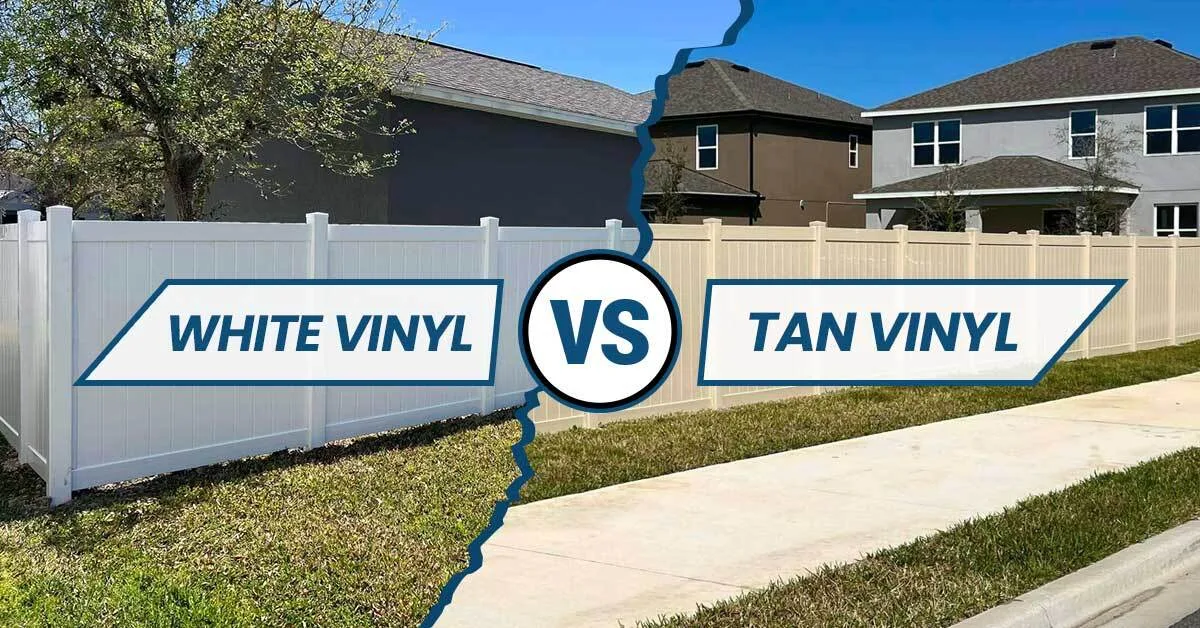
Choosing between a white and tan vinyl fence is mostly an appearance and maintenance decision. Both colors can work well for Orlando homes, but they look different against stucco, landscaping, trim, roofs, patios, pools, and neighboring properties.
White vinyl fencing gives a clean, bright look and often works well with white trim, light-colored homes, and more formal landscapes. Tan vinyl fencing has a warmer look and often blends more softly with beige stucco, sandy soil, pavers, mulch, and natural landscaping.
This article is a planning guide. Vinyl fence color, product performance, warranty coverage, and long-term appearance can vary by manufacturer, product line, installation quality, sun exposure, irrigation, cleaning habits, HOA rules, and site conditions.
Neither white nor tan vinyl fencing is automatically better for every Orlando home. The better choice depends on the home’s exterior colors, landscaping, HOA rules, and how visible the fence will be from the street, patio, pool area, or neighboring properties.
White vinyl creates stronger contrast. It can make a yard feel brighter and more defined, especially around green lawns, pool areas, and homes with white trim. It may also stand out more against darker roofs, colorful landscaping, or shaded areas.
Tan vinyl has a softer appearance. It often blends more naturally with stucco homes, beige or cream exteriors, pavers, mulch beds, and earth-tone landscapes. For homeowners who want the fence to feel less visually sharp, tan may be the better fit.
Fence color alone does not usually determine durability. A white and tan vinyl fence from the same product line should generally have similar strength, panel construction, and maintenance needs.
Durability depends more on product quality, wall thickness, post setting, rail design, gates, hardware, sun exposure, soil conditions, drainage, and installation practices than on whether the fence is white or tan.
Quality vinyl fencing is designed to resist moisture, insects, rot, and routine Florida weather exposure. However, long-term appearance still depends on the specific product, manufacturer specifications, warranty terms, cleaning habits, and site conditions.
Tan vinyl often hides light dust, pollen, mulch splash, and sandy soil better than white vinyl. This can matter in Orlando yards where rain, irrigation, landscaping, lawn mowing, and pool activity leave residue near the bottom of the fence.
White vinyl can show dirt sooner because the surface is brighter. Grass clippings, mildew, sprinkler stains, tannins from leaves, and soil splash may be more noticeable on white panels, especially near landscaping beds or shaded areas.
Both colors still need occasional cleaning. A tan fence may look cleaner longer between washes, but it is not maintenance-free. White vinyl may require more visible touch-up cleaning in areas exposed to irrigation, trees, or heavy landscape debris.
| Factor | White Vinyl Fence | Tan Vinyl Fence |
| Appearance | Bright, crisp, classic | Warmer, softer, more blended |
| Dirt visibility | May show dirt and stains sooner | Often hides light dirt better |
| Best fit | White trim, light homes, pool areas, formal landscapes | Stucco, beige homes, pavers, mulch, natural landscapes |
| Maintenance | Occasional washing | Occasional washing |
| Durability | Depends on product and installation | Depends on product and installation |
Orlando’s sun, humidity, rain, and storm seasons make product quality and installation important for any vinyl fence color. Vinyl does not absorb moisture the way wood does, which is one reason many homeowners choose it for Central Florida yards.
That does not mean every vinyl fence performs the same. Lower-quality products, poor installation, weak gates, improper post setting, drainage problems, or constant irrigation exposure can affect how the fence looks and performs over time.
White and tan vinyl should both be reviewed by product line, not just by color. Homeowners should ask what warranty applies, what the manufacturer covers, and how cleaning, irrigation stains, storm damage, or improper installation may affect coverage.
Tan vinyl often works well with Orlando-area stucco homes because many exteriors use beige, cream, sand, taupe, or earth-tone colors. A tan fence can blend into that palette instead of creating a strong contrast.
White vinyl may work better when the home has white trim, white columns, lighter siding details, or a pool-area layout where a crisp fence line fits the design. White can also brighten a shaded yard or create a more formal border around landscaping.
The best choice is usually made by comparing samples near the home, not by looking at colors online. Vinyl color can appear different depending on sunlight, shade, roof color, pavers, mulch, grass, and nearby homes.
HOA rules can affect vinyl fence color, height, style, placement, and whether privacy fencing is allowed. Some communities approve white vinyl but restrict tan. Others may prefer tan, require a specific style, or limit where a privacy fence can be installed.
Homeowners should check HOA guidelines before ordering materials. Approval may be needed for color, height, gate placement, finished side orientation, and fence location.
Local requirements may also affect fence height, corner lots, easements, pool barriers, and visibility near driveways or sidewalks. A fence color may look right, but the full fence plan still needs to match the property and applicable requirements.
A vinyl fence estimate should identify the fence color, height, style, layout, gates, post locations, removal scope, hardware, and any site conditions that may affect installation.
The estimate should also clarify whether the selected product is white, tan, wood grain, or another available finish. If the homeowner is comparing colors, the estimate should make clear whether both options are available in the same fence style and height.
For Orlando properties, the layout should also account for sandy soil, drainage, sprinkler exposure, slopes, gates, pool areas, easements, and HOA requirements before materials are ordered.
Start with the home’s exterior. Look at the stucco color, trim, roof, pavers, pool deck, landscaping, mulch, and neighboring fences. A color that looks good on one Orlando home may not fit another property with different tones and light exposure.
Then consider maintenance visibility. White may show dirt sooner, while tan may hide light dust and soil better. If sprinklers hit the fence, if trees drop debris, or if landscaping sits close to the panels, color can affect how often cleaning feels necessary.
Finally, confirm product availability, warranty terms, HOA approval, and installation details. The right vinyl fence color should fit the home visually and still work with the property’s layout, gates, drainage, and long-term maintenance needs.
White and tan vinyl fencing can both work well for Orlando homes. White gives a brighter, more defined look, while tan creates a warmer and more blended appearance.
The best choice comes from comparing the fence color against the actual home, landscaping, and site conditions. Before installation, homeowners should review HOA rules, product availability, warranty terms, gate layout, drainage, and cleaning needs.
City Fence can help Orlando and Central Florida homeowners compare white and tan vinyl fencing based on home exterior, layout, gates, privacy needs, and site conditions.
Homeowners planning a new vinyl fence can request a vinyl fence estimate to compare available colors, styles, and installation options before materials are ordered.