

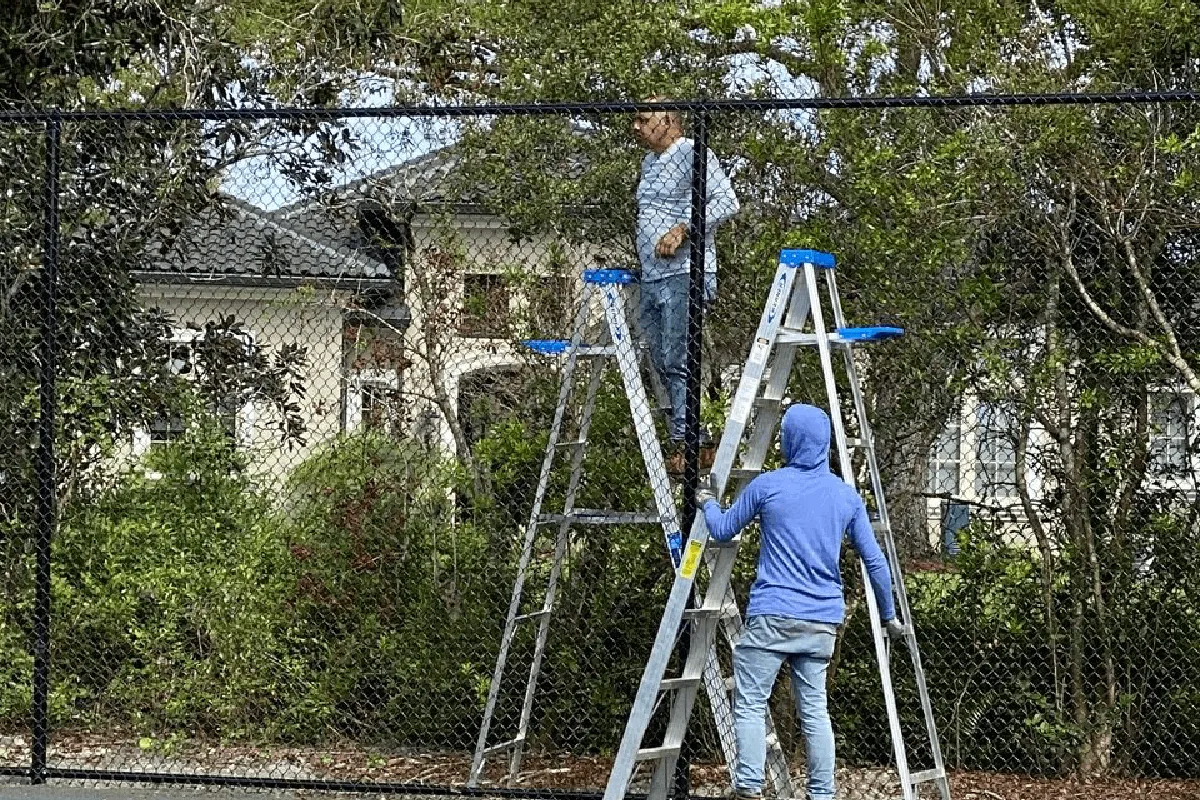
Chain link fencing is a good choice for commercial properties that need practical boundary protection, clear visibility, controlled access, and coverage across large areas. It is especially useful when function matters more than complete privacy or decorative appearance.
However, properties requiring full visual screening, a more polished entrance, or specialized security protection may benefit from another fencing design.
For business owners in Orlando and Central Florida, the decision depends on daily operations, security risks, property layout, and budget.
Understanding these factors can help you determine whether chain link fence installation in Orlando is suitable for your business.
Warehouses, distribution centers, equipment storage yards, industrial facilities, and large commercial properties are often well suited for chain link fencing because they need functional boundaries that support daily operations.
The specific use of the property determines whether chain link is the right choice.
Common applications include:
For example, a warehouse with frequent truck deliveries may benefit from chain link fencing, but the entrance must provide enough clearance for large vehicles.
An outdoor equipment yard may also benefit from a defined perimeter. However, if expensive equipment is visible from public areas, the owner should consider whether that exposure creates additional security concerns.
The following situations illustrate where chain link is most and least suitable.
| Property condition | Chain link suitability | Main consideration |
| Large perimeter with limited privacy needs | Often a good fit | Practical boundary coverage |
| Warehouse with frequent deliveries | Often a good fit | Gate access and vehicle clearance |
| Outdoor equipment storage | Conditional fit | Visibility of valuable equipment |
| Customer-facing entrance | Conditional fit | Appearance expectations |
| Property needing complete visual screening | Less suitable in standard form | Privacy requirements |
| Specialized high-security facility | Requires further assessment | Security system specifications |
Some commercial properties benefit from combining fencing styles.
For example, a business may choose aluminum fencing near its main entrance while installing chain link around rear storage areas.
This allows each section of the property to serve its intended purpose without requiring the same fencing material throughout.
The main benefits of commercial chain link fencing are its open-mesh construction, flexible configurations, protective coating options, and potential cost savings when enclosing larger areas.
Unlike solid fencing, chain link uses interwoven metal wires that create a physical barrier while allowing light and visibility through the mesh.
This construction offers several advantages.
Open visibility: Employees can observe activity on either side of the fence. Clear sightlines may also help with monitoring vehicle movements and identifying visitors approaching designated entrances.
Flexible configurations: Chain link can accommodate different perimeter layouts, fence heights, and gate openings based on the property's requirements.
Protective finish options: Galvanized and PVC-coated materials provide different appearances and protective coatings suited to various site conditions.
Potential cost savings: Chain link may provide a more economical way to cover long property boundaries compared with certain solid or decorative fencing designs.
However, commercial chain link fencing is not automatically the least expensive option. Taller fences, thicker wire, stronger posts, specialized gates, and difficult ground conditions can increase installation costs.
For businesses prioritizing functionality, chain link offers the flexibility to select a suitable configuration without paying for unnecessary decorative or privacy features.
Chain link fencing can provide useful perimeter security, but its effectiveness depends on how the fence fabric, posts, foundations, connections, bottom clearance, and gate hardware work together.
A properly designed chain link fence establishes a physical boundary that can discourage casual trespassing and direct authorized visitors through designated entrances.
However, it cannot guarantee protection against climbing, cutting, forced entry, or vehicle impact.
Several components influence its security performance:
Heavier fence fabric provides limited security benefits if posts or foundations are inadequate, bottom clearance is excessive, or gate hardware cannot reliably secure an entrance. The complete system should be designed around the property's security and access needs.
Commercial gates must support both property security and daily vehicle access.
A warehouse receiving regular truck deliveries needs gate openings that accommodate vehicle width, turning clearance, and nearby structures.
One important installation consideration is whether the gate has enough room to operate without interfering with loading docks, driveways, or building entrances.
Uneven ground can also affect gate movement and the clearance beneath an opening.
These conditions should be assessed before the fence layout is finalized.
For properties with greater security risks, chain link may serve as one part of a broader protection plan rather than the only security measure.
A business should consider alternatives to standard chain link fencing when complete privacy, a formal appearance, or specialized security requirements are more important than open visibility and practical perimeter coverage.
Understanding these limitations can prevent an installation that does not meet the property's needs.
Chain link's open mesh allows people outside the property to see stored equipment, vehicles, materials, and business operations.
This visibility may be undesirable for companies storing valuable inventory or operating near public spaces.
Privacy slats or screening can reduce visibility, but they do not automatically provide complete privacy.
Adding screening can also increase wind pressure on the fence. Depending on the design, stronger posts, foundations, or other structural changes may be necessary.
When complete visual screening is essential, a solid fencing option may be more suitable.
Some commercial properties need fencing that complements a professional, customer-facing environment.
For example, an office entrance, retail location, or commercial property with prominent street frontage may benefit from aluminum fencing.
Chain link may still work well around less visible service areas or rear boundaries.
Businesses handling sensitive operations or storing particularly valuable materials may require more advanced protection.
In these situations, owners should evaluate the property's specific security risks and consider whether a specialized fencing design or additional security measures are necessary.
The most important commercial chain link fence specifications include height, wire gauge, mesh size, protective coating, post support, and gate configuration. Each should be selected according to the property's security needs, daily use, and installation conditions.
The complete fence system matters more than any single material specification.
Fence height affects the boundary's intended level of access restriction.
Wire gauge refers to wire thickness. A lower gauge number generally means thicker wire, which can offer greater resistance to damage.
Mesh size determines the openings between wires and can influence how difficult the fence is to climb or manipulate.
There is no single configuration that works best for every commercial property.
A basic boundary fence and a perimeter intended for stronger access control may require different materials and support structures.
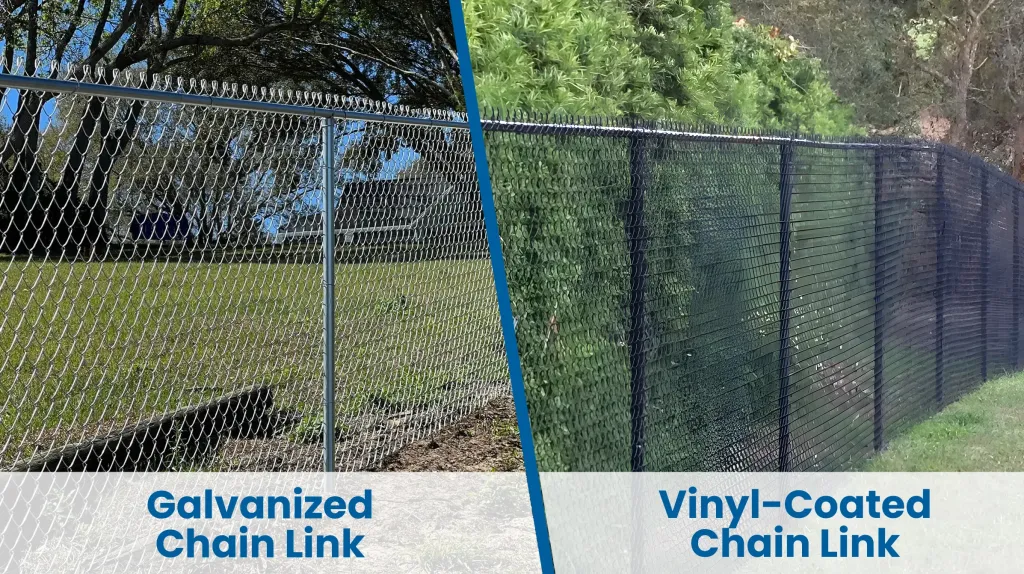
City Fence LLC installs galvanized and PVC-coated chain link fencing.
Galvanized chain link uses a protective zinc coating to help resist corrosion.
PVC-coated chain link typically has an underlying metallic protective coating beneath its colored polymer finish, depending on the specified product.
The outer coating can improve appearance and provide additional protection, but performance still depends on the underlying metal, coating quality, and installation conditions.
Neither finish is completely weatherproof.
For a closer comparison of coatings and durability, read about black versus galvanized chain link fencing.
Posts, rails, and gate supports must match the planned fence height, opening widths, and expected use.
For example, a wide commercial vehicle gate may require a different support arrangement than a smaller pedestrian entrance.
Uneven ground can affect fence alignment, fabric tension, and clearance beneath gates.
In Central Florida, rainfall, irrigation exposure, and drainage conditions also deserve attention when planning fence placement and selecting materials.
Areas where water collects around posts or along low sections of the perimeter may require additional installation planning.
Yes. The City of Orlando requires fence permits for commercial properties within city limits.
According to the city's official fence guidance, commercial fence installations require a permit, and proposed fence locations and heights must be shown on a site plan.
Property owners should also confirm applicable zoning, easements, and other site restrictions before installation.
Properties outside Orlando city limits may follow different permitting requirements.
Reviewing these conditions early can help prevent unexpected changes to the fence layout or installation scope.
The best way to determine whether chain link fencing is right for your commercial property is to compare its security needs, visibility requirements, access points, appearance expectations, and site conditions before requesting an installation estimate.
A warehouse may prioritize delivery access and perimeter control, while an outdoor equipment yard may place greater importance on restricting unauthorized entry.
Before contacting a fencing contractor, consider these questions:
A commercial fencing estimate should clearly identify the proposed fence height, wire gauge, mesh size, posts, gates, hardware, protective coatings, and installation scope.
Two proposals may specify the same fence height but use different materials or support systems.
Those differences can affect the fence's durability, security performance, and overall project value.
Commercial chain link fencing is often a strong choice when your business needs practical boundary protection, clear visibility, and functional access without requiring complete privacy. The final decision should reflect your property's operations, security requirements, and site conditions.
City Fence LLC provides commercial chain link fence installation in Orlando and surrounding Central Florida communities, including galvanized and PVC-coated options.
If you're considering a new commercial fence or full replacement, request a commercial chain link fence estimate to discuss your property's layout, security needs, gate access, and installation requirements.